
 By Nate Bash
The automobile transformed human mobility, shrinking geographical barriers and accelerating industrial economies. However, early automotive development focused heavily on speed, power, and aesthetic styling, frequently treating occupant protection as a secondary consideration. In the early decades of the twentieth century, traffic fatalities scaled alongside vehicle production numbers. This reality forced a profound shift in engineering priorities.
Over the past century, vehicle safety evolved from basic mechanical structures into complex ecosystems governed by software, sensor fusion, and predictive artificial intelligence. This transition marks the shift from passive protection, which aims to minimize injury during a crash, to active intervention, which works to prevent collisions entirely.
The Early Era of Automotive Travel: Structural Barriers and Mechanical Controls
During the initial decades of mass automobile production, vehicles were fundamentally motorized carriages. High-profile designs prioritized structural rigidity over energy management. If a vehicle collided with an object, the rigid steel chassis transferred the entirety of the kinetic energy directly into the cabin and its occupants.
Early engineering milestones during this period laid the groundwork for basic vehicle control and physical protection:
-
Laminated Safety Glass: Introduced in the late 1920s, laminated glass replaced standard plate glass. Standard glass shattered into large, razor-sharp shards during an impact, causing severe lacerations. Laminated glass utilized a layer of polyvinyl butyral sandwiched between two sheets of glass, holding the fragments together upon impact.
-
Hydraulic Braking Systems: Early vehicles relied on mechanical cable brakes, which required immense physical force and suffered from uneven distribution of braking pressure. The transition to four-wheel hydraulic braking systems in the 1920s and 1930s allowed for equalized pressure application, reducing stopping distances and vehicle skidding.
-
Padded Dashboards: In the late 1940s and early 1950s, automakers began introducing foam-padded dashboards to reduce head injuries when occupants were thrown forward during abrupt stops.
Despite these incremental improvements, the lack of restraint systems meant that passengers were routinely ejected from vehicles or struck interior components during a collision.
The Mid-Century Safety Revolution: Seatbelts and Crumple Zones
The late 1950s and 1960s marked the birth of modern automotive safety engineering. Researchers began to analyze the physics of a crash, breaking the event down into two distinct occurrences: the vehicle striking an external object, and the occupants striking the interior of the vehicle.
In 1959, engineer Nils Bohlin developed the three-point safety belt for Volvo. Previous restraint designs consisted of simple lap belts, which frequently caused internal organ damage or failed to prevent the torso from flying forward. The three-point configuration secured both the upper and lower body, distributing the forces of deceleration across the chest, shoulders, and pelvis. Recognizing the lifesaving potential of the design, the automaker released the patent to competitors for free, paving the way for global adoption.
Concurrently, engineer Bela Barenyi developed the concept of the crumple zone for Mercedes-Benz. Barenyi challenged the prevailing wisdom that a car needed to be completely rigid to protect occupants. He designed a vehicle body divided into three structural zones: a rigid passenger cabin flanked by deformable front and rear sections.
During a frontal or rear collision, these deformable zones intentionally buckled, absorbing and dissipating the kinetic energy over a longer duration. By expanding the time frame of deceleration, the physical force transmitted to the passenger cabin decreased significantly.
Federal intervention accelerated the standardization of these features. The passage of the National Traffic and Motor Vehicle Safety Act of 1966 in the United States mandated features such as energy-absorbing steering columns, dual-occupant master cylinders for independent front and rear braking, and standard seatbelts in all passenger seating positions.
The Rise of Electronics: Anti-lock Braking Systems and Airbags
The late twentieth century integrated digital technology into automotive platforms, transforming safety systems from purely mechanical configurations into electronically managed assets.
Anti-lock Braking Systems emerged as a critical innovation in active safety. When a driver slams on the brakes in an emergency, the tires can lock up, causing the vehicle to skid and stripping the driver of steering control. ABS utilizes electronic wheel speed sensors to detect when a wheel is about to lock. The system then automatically modulates hydraulic brake pressure to that specific wheel dozens of times per second, maintaining tire traction and enabling the driver to steer around obstacles while braking.
Following the success of ABS, engineers introduced Electronic Stability Control in the 1990s. This system monitors steering wheel angle sensors and vehicle yaw rate sensors to determine if the vehicle is deviating from the driver’s intended path. If the system detects understeer or oversteer, it automatically applies braking pressure to individual wheels and adjusts engine power to bring the car back into alignment, drastically reducing rollover incidents and spinouts.
Occupant protection also advanced with the deployment of the Supplemental Restraint System, commonly known as the airbag. While developed throughout the 1970s and 1980s, airbags became a federal requirement for all passenger cars in the United States by the late 1990s. Using pyrotechnic propellants triggered by microelectronic accelerometers, airbags inflate within milliseconds of an impact, providing a cushion that prevents occupants from striking the steering wheel, dashboard, or structural pillars.
The Modern Paradigm: Advanced Driver Assistance Systems
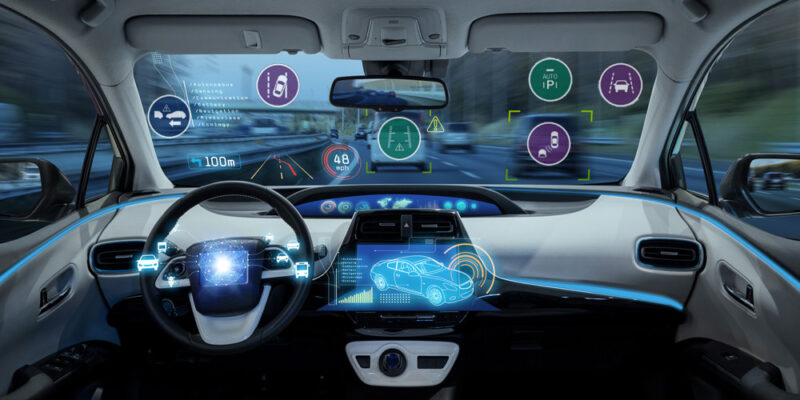
Modern vehicle safety relies heavily on predictive capabilities. Vehicles are no longer passive participants in an accident; they actively perceive their surroundings to mitigate or eliminate driver error. Advanced Driver Assistance Systems rely on sensor fusion, combining input from radar, cameras, ultrasonic sensors, and light detection and ranging systems to create a real-time digital map of the driving environment.
These technologies actively support the driver through distinct interventions:
-
Automatic Emergency Braking: This system continuously scans the roadway ahead for vehicles, pedestrians, or obstacles. If the onboard computer determines that a collision is imminent and the driver fails to act, the system automatically applies maximum braking force.
-
Lane Keep Assist and Departure Warning: Forward-facing cameras track painted road lines. If the vehicle drifts out of its lane without a turn signal, the system alerts the driver via haptic or auditory feedback and applies subtle steering corrections to center the vehicle.
-
Blind Spot Monitoring: Rear-facing radar units detect vehicles approaching from adjacent lanes, activating visual indicators in the side mirrors to prevent dangerous lane changes.
The Next Frontier: Autonomy and Connected Infrastructure
As automotive engineering progresses toward higher levels of autonomy, safety design is shifting from driver assistance to holistic environmental awareness. Vehicle-to-Everything communication allows cars to share real-time data with surrounding traffic, traffic lights, and pedestrian infrastructure. A vehicle approaching an intersection can receive an alert from a hidden car running a red light blocks away, allowing it to brake before the threat enters visual range.
Furthermore, internal cabin safety now incorporates advanced driver monitoring systems. High-definition infrared cameras track eyelid movement, gaze direction, and facial positioning to detect signs of drowsiness or distraction. If the driver loses focus, the vehicle issues escalating alerts and can safely pull over to the shoulder if the driver becomes unresponsive. Through this combination of external awareness and internal monitoring, modern vehicles continue to reduce the human vulnerabilities that have dominated traffic statistics for more than a century.
Frequently Asked Questions
How do modern active safety systems impact automotive insurance premiums?
Insurance companies adjust premiums based on statistical risk and the historical repair costs of specific vehicle classes. Vehicles equipped with active safety features like automatic emergency braking and blind-spot monitoring generally experience fewer low-speed collisions, which can lead to discounts on liability and collision coverage. However, the sophisticated sensors, cameras, and radar units required for these systems are often mounted in vulnerable areas like bumpers and windshields. When collisions do occur, repairing or replacing these calibrated components is significantly more expensive than fixing traditional body panels, which can offset overall premium reductions.
What role do tires play in the effectiveness of modern electronic safety systems?
Electronic safety features like anti-lock braking systems and electronic stability control do not generate physical grip; they merely manage the available traction between the vehicle and the road surface. This physical connection depends entirely on the contact patch of the tires. If a tire is bald, improperly inflated, or unsuited for the weather conditions, its coefficient of friction drops substantially. Under these conditions, the sensors will trigger the safety systems prematurely or frequently, but the mechanical system will struggle to slow or stabilize the car because the underlying rubber cannot sustain the required grip.
How are safety features tested and validated before reaching consumer vehicles?
Before an automotive safety system reaches the market, it undergoes a dual verification process involving digital simulations and physical laboratory testing. Engineers run millions of virtual crash simulations using finite element analysis to see how structural components deform. Following simulation, physical prototype vehicles undergo rigorous validation at specialized facilities. These tests include hitting barriers at various angles using anthropomorphic test devices, commonly known as crash test dummies, equipped with hundreds of internal sensors measuring force, acceleration, and deflection. Active systems are tested on closed tracks using soft, inflatable target cars to evaluate radar and camera response times.
What is the exact difference between active safety features and passive safety features?
The distinction lies entirely in whether the feature works to prevent an accident or to protect occupants during an accident. Active safety features operate continuously while driving to avoid a collision. Examples include lane departure warnings, electronic stability control, and automatic emergency braking. Passive safety features remain dormant until a collision occurs. Once an impact is detected, passive systems activate to absorb kinetic energy and minimize bodily injury. Examples include crumple zones, seatbelt pretensioners, side-curtain airbags, and safety cage cabins.
How do extreme weather conditions affect advanced driver assistance systems?
Advanced driver assistance systems rely heavily on optical cameras and radar sensors to read the surrounding environment. Heavy snowfall, torrential rain, and dense fog can degrade the line of sight for optical cameras, preventing them from detecting lane markings or recognizing pedestrians. Similarly, ice accumulation or mud buildup on front grilles can block radar waves, causing the vehicle to temporarily disable certain features like adaptive cruise control or automatic emergency braking. Automakers address this by incorporating sensor heaters and lens-clearing jets, but driver vigilance remains necessary during severe weather.
Why did it take several decades for the three-point seatbelt to become universally mandated?
Although Volvo introduced the three-point seatbelt in 1959 and shared the patent openly, universal adoption faced significant hurdles, including manufacturing retooling costs, consumer pushback, and a lack of cohesive regulatory frameworks. Many drivers in the mid-twentieth century viewed seatbelts as uncomfortable, restrictive, or unnecessary, while some falsely believed that being thrown clear of a burning or submerged vehicle was safer than being restrained. It required decades of public safety campaigns, structural updates to vehicle manufacturing lines, and the eventual passage of strict state and federal laws to turn seatbelt usage into a standard societal habit.
What are the regulatory standards governing cyber security in modern connected vehicles?
As vehicles transitioned into connected nodes that receive over-the-air software updates and communicate via wireless networks, regulatory bodies introduced strict cyber security frameworks. Organizations like the United Nations Economic Commission for Europe established regulations requiring automakers to implement certified Cyber Security Management Systems. These standards require manufacturers to conduct rigorous threat modeling, secure vehicle architectures against unauthorized access to the controller area network bus, and maintain continuous vulnerability monitoring throughout the life cycle of the vehicle to prevent malicious exploitation of steering, braking, and powertrain controls.